
In high-stakes industrial assembly, under-torqued or unevenly tightened structural bolts lead to catastrophic joint failure, flange leakage, and operational downtime. Manual torque wrenches and crude impact guns can’t provide the repeatable accuracy, high-speed rotation, or numerical torque control that modern heavy engineering demands.
Deploying a calibrated electric torque wrench bridges the gap between field ergonomics and strict engineering compliance. Discover how digital electric bolting systems, non-impact continuous rotation motors, and multi-pass tightening protocols eliminate joint relaxation and safeguard heavy infrastructure.
What is an Electric Torque Wrench?
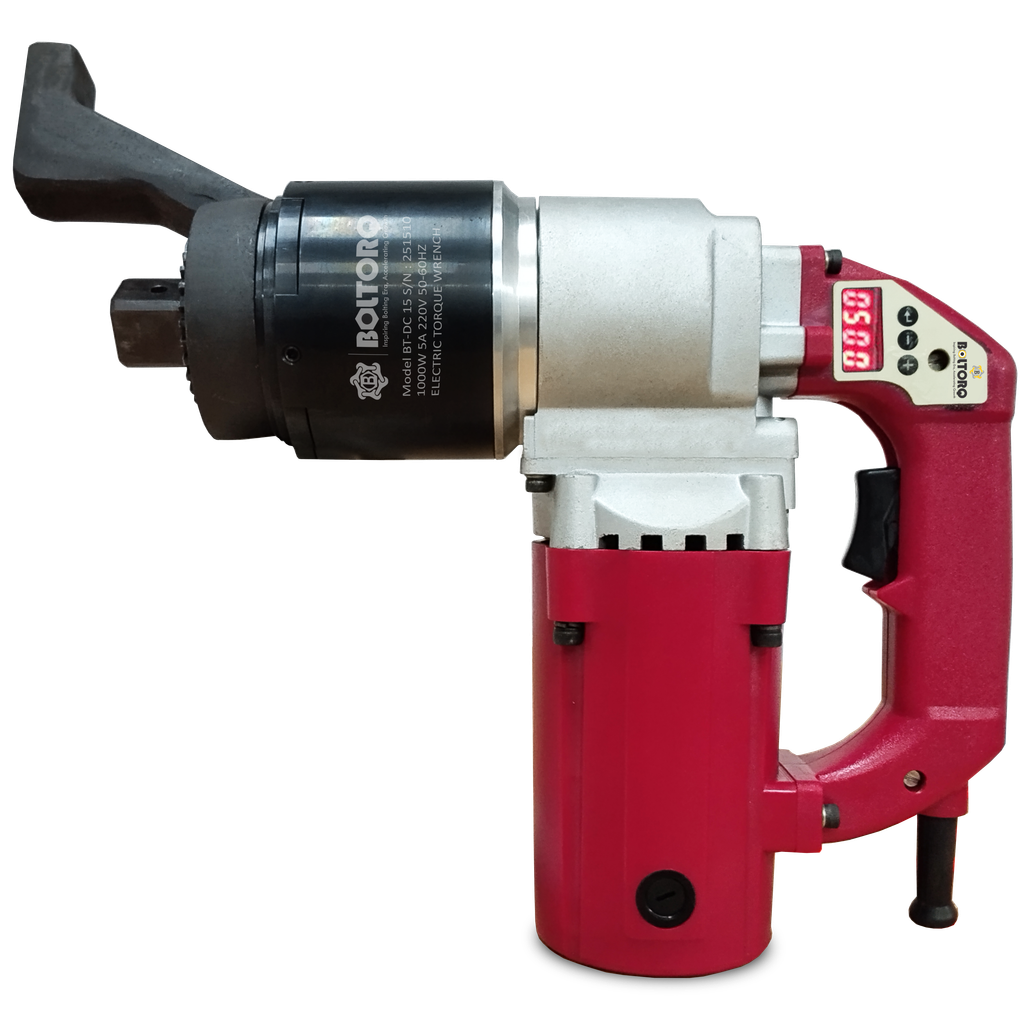
An electric torque wrench is a motor-driven, non-impacting power tool engineered to apply precise, numerical torque to threaded fasteners, High-Strength Friction Grip (HSFG) bolts, and heavy flange connections.
Unlike erratic impact wrenches that rely on hammer blows, electric torque tools utilize precision planetary gearboxes and micro-processor control units. This delivers smooth, continuous rotational torque ranging from 100 Nm up to 6,000 Nm with accuracy tolerances down to +/-3%.
Raw Voltage Input -> Smart LCD Control Unit -> High-Torque Electric Motor -> Planetary Gearbox Reduction -> Calibrated Reaction Arm -> Precision Fastener Output
4 Common Failure Points Handled by Electric Torque Wrenches
1. Bolt Over-Torquing & Yield Failure
Applying excessive torque stretches structural bolts beyond their elastic limit, causing permanent bolt deformation or sudden thread shear.
- The Root Cause: Reliance on manual impact tools or operator estimation without automatic torque cut-off switches.
- The Field Solution: Digital electric torque wrenches feature preset torque limits with automatic motor shut-off the instant target values are reached.
2. Flange Leakage in Process Piping & Pressure Vessels
Uneven tightening across process pipe flanges causes crushed gaskets, warped flange faces, and dangerous fluid or gas leaks during hydrotesting.
- The Root Cause: Uncalibrated torque scatter across adjacent flange studs during turnaround assembly.
- The Field Solution: Controlled electric torque systems deliver repeatable +/-3% clamp load accuracy using standardized multi-pass star tightening patterns.
3. Operator Fatigue & Hand-Arm Vibration Syndrome (HAVS)
Continuous manual bolting on high-tonnage structural steel frames creates severe operator exhaustion and long-term joint injury.
- The Root Cause: Manual torque multipliers requiring excessive physical leverage and high-vibration impact tools.
- The Field Solution: Ergonomic, lightweight electric bolting drives provide non-impact, low-vibration operation designed for prolonged working shifts.
4. High-Elevation Assembly Delays in Steel Structures
Rigging heavy hydraulic pumps, hoses, and power packs up wind turbine towers or high-rise steel scaffolding creates severe site bottlenecks.
- The Root Cause: Heavy, multi-component hydraulic torque wrench setups requiring external fluid reservoirs.
- The Field Solution: Direct-plug 220V electric torque wrenches offer single-tool mobility without hydraulic oil lines or bulky external pumps.
Boltorq: Industrial Electric Torque Wrench Series
Boltorq manufactures heavy-duty digital and dial-type electric torque wrenches engineered specifically for heavy industrial applications, power generation, and structural steel erection.
| Operational Metric | Generic Impact / Manual Wrench | Boltorq BT-DC Digital Electric Series |
| Torque Range Output | Variable, uncalibrated | 100 Nm up to 5,000+ Nm (BT-DC15 to BT-DC50) |
| Tightening Accuracy | +/- 20% to 30% scatter | +/- 3% Repeatable Calibration Standard |
| Control Interface | None / Manual estimation | Smart Digital LCD Screen with Single-Nm Increments |
| Rotation Dynamics | High-vibration impact hammering | High-Speed Non-Impact Continuous Rotation |
| Power Infrastructure | Pneumatic air lines / Manual lever | Standard 220V Single-Phase Electric Drive |
The Boltorq 5-Step Digital Torque Execution Framework
Step 1: Joint Load & Torque Value Calculation
Site engineers calculate target torque parameters based on bolt grade (e.g., Grade 8.8, 10.9, or 12.9), thread diameter, lubricant friction coefficient, and ASME PCC-1 / AWS structural standards.
Step 2: Smart Control Unit Parameter Setup
The operator sets the exact numerical torque value on the digital LCD interface of the Boltorq BT-DC Series wrench. Target values are locked in single-Nm increments to eliminate human error.
Step 3: Ergonomic Reaction Arm Positioning
The tool’s heavy-duty reaction arm is anchored securely against a neighboring nut or solid structural abutment to absorb counter-torque forces safely without operator strain.
Step 4: High-Speed Continuous Rotation
Pressing the trigger activates the soft-start electric motor. High-precision planetary gearing delivers smooth, continuous rotational force, driving the nut down rapidly without impact vibrations.
Step 5: Automatic Torque Cut-Off & Verification
Upon reaching the exact programmed torque limit, the control unit instantly cuts power to the drive. The digital display confirms target torque completion for joint auditing.
Frequently Asked Questions
How does an electric torque wrench compare to a hydraulic torque wrench?
Electric torque wrenches offer faster continuous rotation and complete single-tool portability—operating directly off standard electric power without external hydraulic pumps, hoses, or oil. Hydraulic torque wrenches are generally reserved for ultra-high torque applications above 10,000 Nm or tight-clearance low-profile spaces.
Can Boltorq electric torque wrenches be used on Pre-Engineered Building (PEB) sites?
Yes. Boltorq BT-DC digital electric series wrenches are widely deployed across PEB construction, bridge assembly, and structural steel erection where high-speed continuous tightening of HSFG structural bolts (M24 to M36+) is required.
What maintenance is required for continuous-duty industrial torque tools?
Keep tool air vents clean of debris, inspect drive sockets for wear, and conduct annual calibration checks against traceable torque calibrator standards to maintain +/-3% field accuracy.
Partner with the Best Electric Torque Wrench Manufacturer
Precise joint tightening requires industrial-grade machinery, verified motor controls, and expert technical support. Whether you need single-tool supply, bulk site tooling, or complete on-site bolting services, Boltorq provides field-proven solutions designed for high-tonnage performance.
- Product Range: Digital Electric Torque Wrenches (BT-DC Series), Dial Type Electric Torque Wrenches (BT-EC Series), Hydraulic Torque Wrenches, Bolt Tensioners, and Torque Calibrators.
- Industrial Footprint: Trusted across Wind Energy, Oil & Gas Pipelines, Infrastructure Bridges, Steel Fabrication, and Mining Machinery.
Contact Boltorq Technical Sales & Service Support to request detailed technical datasheets, get customized RFQ quotes, or schedule an on-site product demonstration.