
Why Use a Torque Wrench? The Ultimate Guide to Precision Bolting for Industrial Safety

In the world of heavy-duty engineering—from the bustling refineries in Texas to the massive infrastructure projects in Gujarat—the difference between a successful project and a catastrophic failure often comes down to a single measurement: Torque.
Whether you are assembling a wind turbine or maintaining a subsea pipeline, “hand-tight” is no longer an option. This is where the industrial torque wrench becomes the most critical tool in your arsenal. At Boltorq, we specialize in controlled bolting solutions that ensure every joint is secured with mathematical precision.
But why is a torque wrench so indispensable? Let’s dive into the core reasons why professionals across the USA and India trust these precision instruments.
1. Preventing the “Danger Zone”: Under-Tightening vs. Over-Tightening
The primary reason to use a torque wrench is to apply the exact amount of tension required for a specific fastener.
- Under-Tightening: Leads to loose bolts, which can vibrate out of place, causing equipment failure or fluid leaks in high-pressure environments like oil and gas.
- Over-Tightening: Can stretch the bolt beyond its yield point, stripping threads or causing the bolt head to snap entirely.
By using a calibrated Boltorq manual torque wrench or a digital electric torque wrench, you eliminate the guesswork, ensuring the joint stays within its safe design parameters.
2. Enhancing Structural Integrity and Safety
In high-stakes industries like aerospace, construction, and power generation, safety is non-negotiable. A hydraulic torque wrench is essential for high-load applications where human strength isn’t enough.
For heavy-duty projects in India’s manufacturing hubs, searching for a reliable hydraulic torque wrench price often leads to Boltorq, where we balance cost-efficiency with high-grade aerospace alloy durability.
3. Operational Efficiency and Reduced Downtime
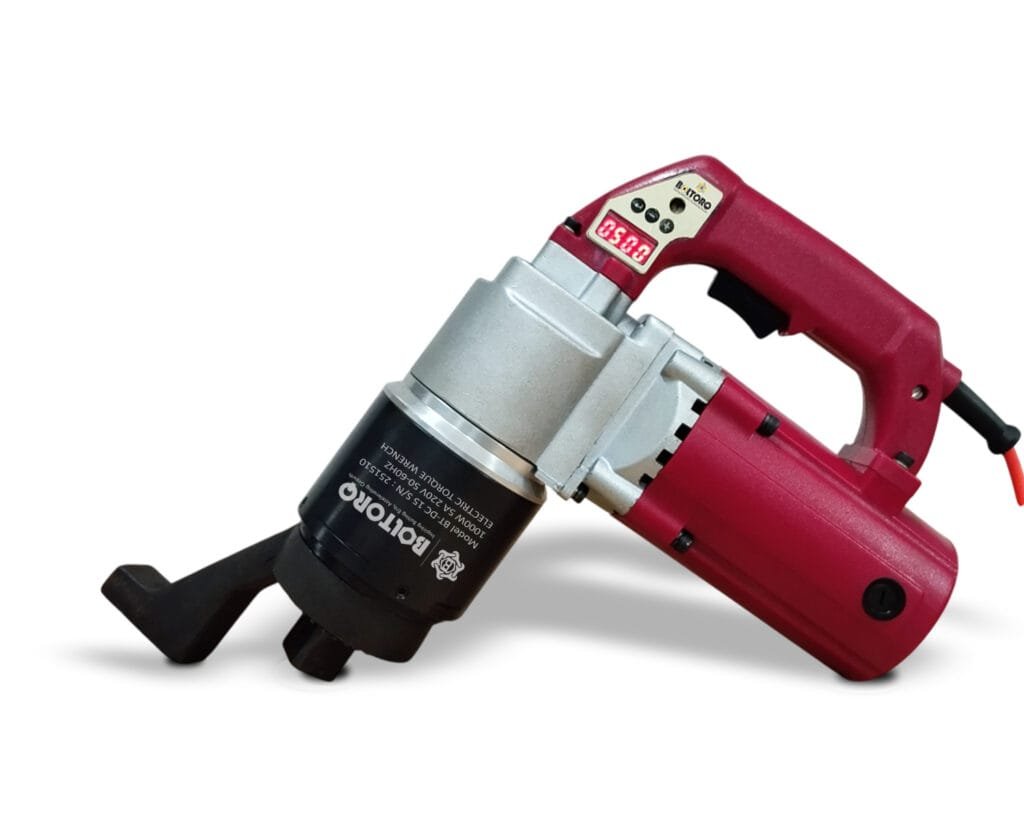
Time is money. In the US industrial market, “Turnaround Time” (TAT) is a key metric. Using an electric torque wrench (ETW) from Boltorq allows for faster fastening with repeatable accuracy. Our BT-ETW series features digital displays that let operators set torque values in seconds, significantly reducing the time required for flange bolting or structural steelwork.
Choosing the Right Torque Wrench for Your Region
Depending on your location and specific application, the “best” tool may vary:
| Application | Recommended Tool | Key Benefit |
| Wind Turbines (US/Global) | Hydraulic Square Drive Wrench | High torque output for tower bolt sections. |
| Manufacturing Lines (India) | Electric Torque Wrench | Consistent, repeatable torque for assembly lines. |
| Petrochemical Plants | Low Profile Hydraulic Wrench | Ideal for tight spaces and flange bolting. |
| General Maintenance | Manual Click-Type Wrench | Portability and ease of use for onsite repairs. |
Why Boltorq is the Preferred Choice in India and the USA
At Boltorq, we don’t just sell tools; we provide bolted joint solutions.
- Precision Engineered: Our tools maintain an accuracy of ± 3%, meeting international ISO 9001:2015 standards.
- Global Reach: From our headquarters in Jamnagar, India, we export high-performance bolt tightening equipment to the USA, ensuring that global industries have access to the same level of precision.
- Durability: Made from high-strength alloy steel and aerospace-grade aluminum, our tools are built to withstand the harshest industrial environments.
Final Thoughts: Accuracy is an Investment
Using a torque wrench is about more than just following a manual—it’s about protecting your assets, your reputation, and your workforce. When you choose Boltorq, you are choosing an industry leader committed to accelerating growth through precision.
Read Also: The Science of Accuracy: Why Calibration is Non-Negotiable
Ready to upgrade your bolting process?
Explore our full range of Hydraulic Torque Wrenches and Electric Fastening Tools. Whether you are looking for a quote in USD or INR, our team is ready to provide the technical support you need.
Contact Boltorq Today for a Custom Quote
FAQs
Why is it important to use a torque wrench in industrial bolting?
Using a torque wrench is essential to ensure a fastener is tightened to its specific design tension. In industries like Oil & Gas and Power Generation, applying the correct torque prevents bolt fatigue, thread stripping, and joint failure. Without a calibrated tool, you risk uneven gasket compression, which is the leading cause of hazardous leaks and expensive industrial shutdowns
Which is better: a Hydraulic Torque Wrench or an Electric Torque Wrench?
The choice depends on your specific application:
Hydraulic Torque Wrenches: Best for ultra-high torque requirements (up to 40,000+ Nm) and tight clearances where raw power and durability are needed, such as in subsea or heavy mining.
Electric Torque Wrenches: Preferred for high-speed, repeatable tasks and environments where precision data logging is required. They offer continuous rotation and are widely used in wind turbine assembly and bridge construction across India and the USA.
How often should a torque wrench be calibrated?
To maintain ISO 6789 standards, an industrial torque wrench should be calibrated every 12 months or every 5,000 cycles, whichever comes first. For critical infrastructure projects in the US or heavy manufacturing in India, some safety protocols may require more frequent checks (weekly or monthly) to guarantee an accuracy of +-3%.
Can I use an industrial torque wrench to loosen bolts?
While some manual torque wrenches are bi-directional, most are optimized for tightening. For loosening rusted or “frozen” bolts, a Hydraulic Square Drive Wrench is highly effective. However, you should never exceed the wrench’s maximum torque capacity during loosening, as this can damage the internal calibration sensors.
What is the typical hydraulic torque wrench price in India vs. the USA?
The price varies based on the torque capacity, material (like high-strength aerospace alloys), and included features like digital displays. Generally, Boltorq provides competitive global pricing that balances premium quality with cost-efficiency. In India, prices often start around ₹45,000 for basic manual setups, while high-end hydraulic systems in the US market are priced based on the total controlled bolting solution required.
What happens if I over-torque a bolt?
Over-torquing stretches the bolt beyond its elastic limit into the “plastic deformation zone.” This weakens the fastener’s structural integrity, making it prone to snapping under load. In high-pressure flanges, over-tightening can also “crush” the gasket, ironically causing the very leaks you were trying to prevent.

0 Comments