
Maximizing Structural Integrity: A Real-World Case Study on Digital Torque Efficiency
In mega-scale industrial infrastructure, a single structural failure can halt operations, cost millions, and compromise site safety. The integrity of every foundation bolt, flange joint, and structural connection relies entirely on one factor: precise, repeatable torque control.
Consider the reality of a modern Pre-Engineered Building (PEB) project or high-load industrial asset installation. Hundreds of high-strength structural bolts must be tightened systematically.
Traditional bolting workflows often run into a common operational bottleneck. Using manual methods or bulky hydraulic systems introduces substantial setup delays, operator fatigue, and variance in joint quality.
The Challenge: Speed vs. Traceable Accuracy
A major structural infrastructure setup required the rapid, precise installation of high-tensile bolts across critical structural nodes.
The project faced three core challenges:
- Tight Project Timeline: Traditional hydraulic setups required extensive hose routing and heavy power pumps, slowing down movement across high-elevation framework sections.
- Strict Compliance Audits: Every joint required precise, verified tensioning to meet engineering design specifications.
- Operator Fatigue: Heavy physical labor over long shifts increases the likelihood of human error, leading to under- or over-torqued connections.
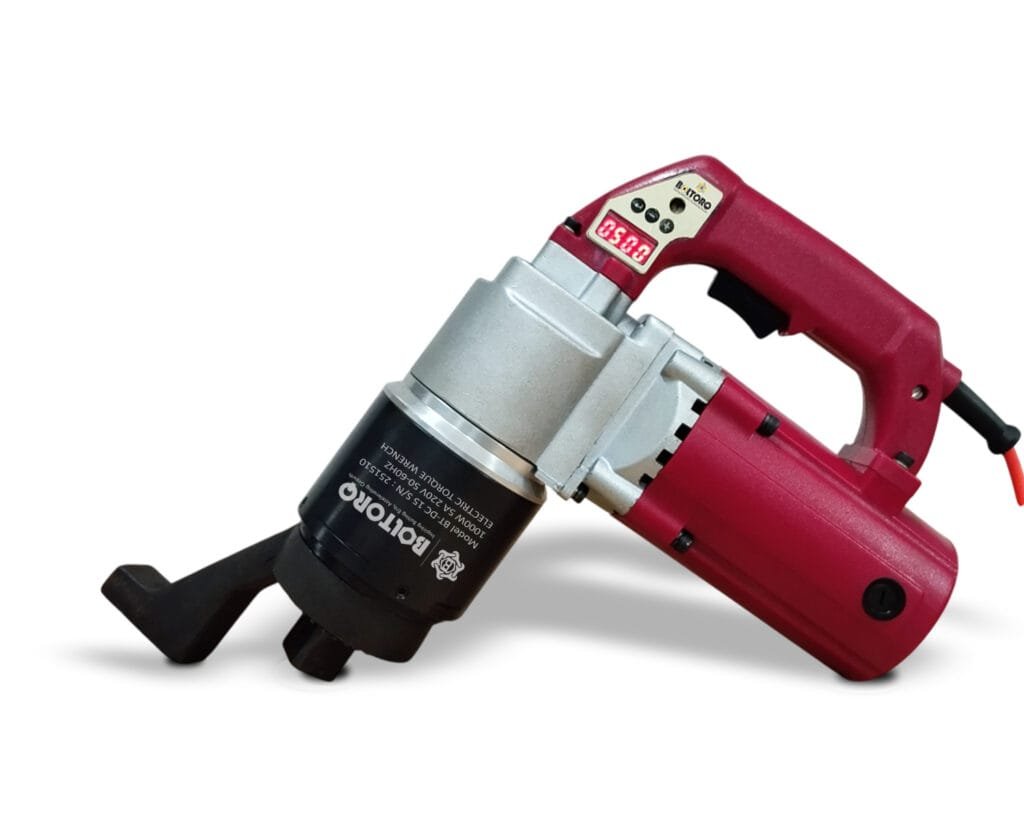
The Solution: The Digital Plug-and-Play Workflow
The field engineering team transitioned away from standard mechanical and hydraulic tools, implementing the BOLTORQ BT-DC Series Digital Electric Torque Wrench.
The workflow was streamlined into a simple, high-speed operation:
- Digital Value Configuration:Under 30 seconds.The site supervisor references the engineering specification sheet and inputs the exact numerical torque target (e.g., 1,500 Nm) into the integrated LCD control unit.
- Safety Initialization:Instant switch.The operator locks the tool into RUN mode. This prevents accidental value modification during high-volume handling on the scaffolding.
- Continuous Tightening Execution:Seconds per bolt.The operator positions the tool. The self-contained 220V electric motor delivers smooth, continuous, non-impacting rotation, seating the bolt with zero jerk or violent kickback to the operator’s wrists.
- Automated Shut-off Verification:Instantaneous response.The internal sensory system monitors real-time resistance. The moment the preset numerical value is reached, the tool automatically cuts power. The joint is perfectly secured without relying on human reaction time.
The Value-Driven Results
By moving to a digitally controlled, electric workflow, the project realized immediate, measurable improvements in field efficiency and safety:
- Elimination of Secondary Verification: Because the digital control unit shuts off automatically at the precise metric, the rate of joint rejection dropped to zero percent.
- 3x Faster Cycle Times: Eliminating hydraulic hoses, pumps, and fluid maintenance allowed operators to move quickly from node to node, dramatically reducing labor hours per structure.
- Enhanced Workplace Ergonomics: The soft-start mechanism and low vibrational profile drastically reduced operator fatigue, keeping field crews fresh, focused, and safe throughout the shift.
Engineering Insight: While hydraulic torque tools remain essential for extreme mega-torque applications exceeding 5,000 Nm, self-contained digital electric wrenches provide the optimum balance of mobility and absolute precision for high-volume structural frameworks.
Optimizing your bolting workflow protects your structural assets and your bottom line. To find the exact digital tooling specifications for your next infrastructure project, explore the BOLTORQ BT-DC Digital Series technical breakdown.


0 Comments