
7 Critical Electric Torque Wrench Use Cases in Modern Industry
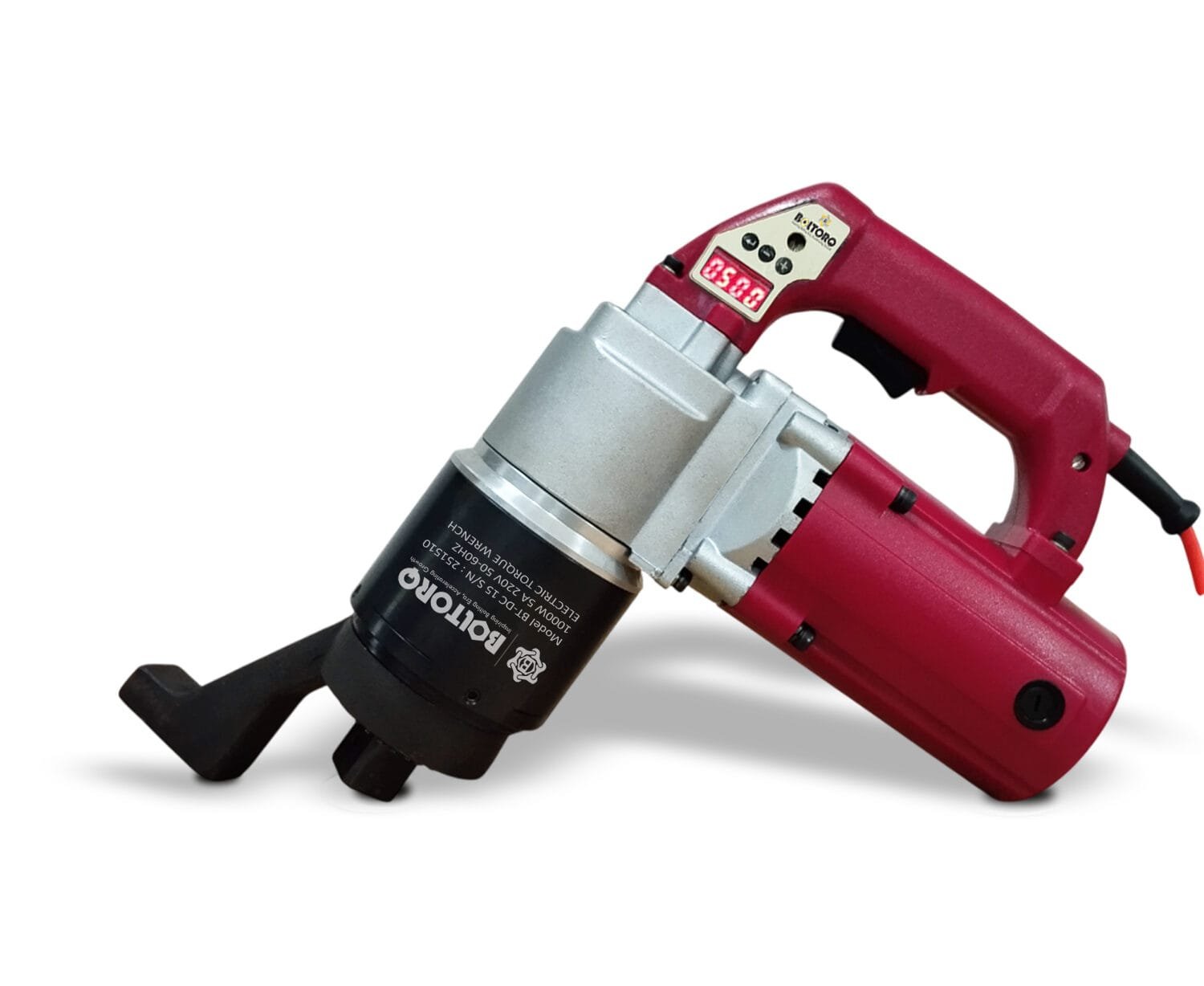
For decades, the “click” of a manual wrench was the gold standard. However, in the era of Industry 4.0, “click” is no longer enough. Modern infrastructure and manufacturing demand traceability.
“Precision is no longer a luxury in industrial fastening; it is a regulatory requirement. A single bolt failure in a wind turbine or a bridge segment can lead to catastrophic losses. Digital torque technology provides the ‘digital birth certificate’ for every joint.” — Industrial Engineering Review, 2024.
7 Critical Electric Torque Wrench Use Cases
1. Renewable Energy (Wind & Solar)
The assembly of wind turbine towers and nacelles requires thousands of high-tensile bolts.
- The Challenge: High-altitude environments and constant vibration.
- The Solution: Using an Electric Torque Wrench (Digital Type) allows technicians to pre-set torque values and receive a vibrate/buzzer alert, ensuring 100% compliance even in noisy, windy conditions.
2. Infrastructure & Bridge Construction
Steel girders and Pre-Engineered Buildings (PEB) rely on uniform clamping force.
- The Problem: Over-tightening can cause bolt stripping, while under-tightening leads to structural fatigue.
- The Solution: Digital wrenches offer ±3% accuracy, ensuring every bolt across a 500-meter bridge span carries an equal load.
3. Automotive & Heavy Machinery Assembly
From electric vehicle (EV) chassis to mining dump trucks, speed is as vital as accuracy.
- The Benefit: Continuous rotation. Unlike hydraulic wrenches that work in cycles, electric models provide constant speed, reducing fastening time by up to 70%.
4. Oil, Gas & Petrochemical Flanges
Sealing a high-pressure flange requires a specific bolting sequence and exact torque.
- The Advantage: Digital models from Boltorq feature LED displays that allow for real-time monitoring of “Nm” or “lbf.ft” units, preventing hazardous leaks.
5. Railway Maintenance & Rolling Stock
Train tracks and engine mounts face relentless rhythmic stress.
- The Use Case: Fastening rail joints and bogie components. The portability of electric tools eliminates the need for trailing air hoses or heavy hydraulic pumps.
6. Power Plant Maintenance (Nuclear & Thermal)
High-heat environments require tools that won’t fail under pressure.
- The Solution: The rugged mild-steel construction of the BT-DC Series handles the thermal and physical rigors of power generation sites.
7. Aerospace & Defense
Margins for error in aerospace are non-existent.
- The Solution: Digital logging. Many advanced electric wrenches can export data, providing an audit trail for safety inspectors.
Comparative Analysis: Electric vs. Hydraulic vs. Manual
To help procurement managers make an informed decision, here is how the Boltorq Digital Electric Series stacks up against traditional methods:
| Feature | Manual Click Wrench | Hydraulic Torque Wrench | Digital Electric Wrench |
| Accuracy | Low (±5-10%) | Moderate (±4%) | High (±3%) |
| Speed | Slow/Laborious | Moderate (Cycle-based) | Fast (Continuous) |
| Data Logging | None | Limited/External | Integrated Digital |
| Portability | High | Low (Requires Pump/Hose) | High (Plug-and-Play) |
| Operator Fatigue | Very High | High (Heavy Setup) | Low (Ergonomic) |
Technical Spotlight: The Boltorq BT-DC Series
For those seeking a professional-grade solution, the Boltorq Digital Type is engineered for the heaviest loads.
| Model | Max Torque (Nm) | Bolt Size Range | Weight (Kg) |
| BTDC-10 | 1000 Nm | M22 – M24 | 8.0 Kg |
| BTDC-25 | 2500 Nm | M27 – M30 | 9.6 Kg |
| BTDC-50 | 5000 Nm | M36 – M42 | 15.0 Kg |
FAQs: Solving Your Bolting Problems
What happens if I over-torque a bolt?
Over-torquing stretches the bolt beyond its “yield point,” leading to immediate snapping or a delayed failure under load. A digital torque wrench prevents this with an automatic shut-off and buzzer alert.
Can I use an electric torque wrench for loosening?
While they can loosen bolts, it is highly recommended to use a “breaker bar” for rusted fasteners to protect the calibration of your digital tool.
How often should I calibrate my digital wrench?
For industrial use, calibration should be performed every 12 months or after 5,000 cycles to maintain the ±3% accuracy standard.
Final Verdict: Is it Worth the Investment?
The initial cost of an Electric Torque Wrench (Digital Type) is higher than a manual one, but the ROI is realized through speed and safety. By reducing labor time and eliminating the risk of rework or joint failure, it remains the most cost-effective tool for any serious industrial operation.
Ready to upgrade your bolting accuracy? Explore the full range of Boltorq Digital Solutions and bring precision to your job site today.


0 Comments